Fibber
“I never lie, but no one can force me to tell the truth.” — Charles de Talleyrand.
How common is lying during interviews? Are some lies acceptable? Can we identify typologies of liars? What signals during interviews should raise interviewers’ alertness?
Contrary to popular belief, lies have long legs. Another saying goes that there is no perfect crime. However, we might have doubts, especially when delving into statistics about undetected murders from 1980 to 2008 in the USA: nearly 185,000 of them remain unsolved (Thomas Harggrove, ‘Cold Case Homicide Statistics’). It can be said with a high degree of certainty that over the centuries, a vast number of perfect crimes have occurred, and some of them remain undetected because the liars and their lies could not be identified.
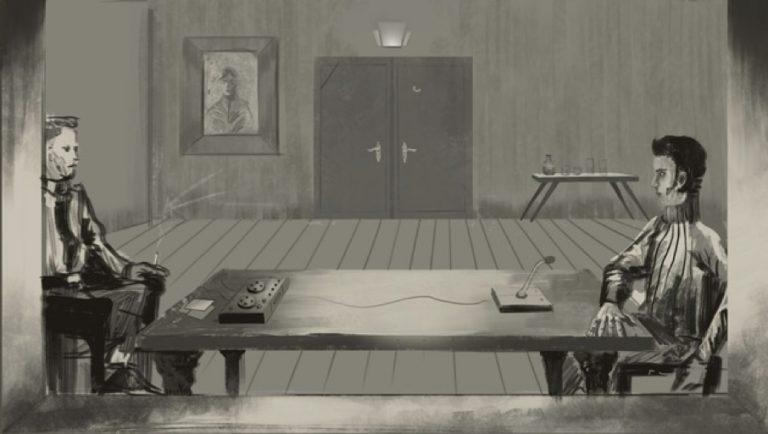
A few weeks ago, I had the opportunity to conduct a behavioral interview (a type of selection interview) with Leon. He was focused, stable, dressed casually but quite expensively, with attention to detail — a style typical of employees in technology firms or those collaborating with them. He maintained good eye contact, and his responses were truly logical, providing precise answers to the questions asked. The interview with Leon lasted almost two hours and took place in a great atmosphere. The proposed position was 90% aligned with his previous competencies and experience as a key account manager. After asking for permission to verify information with his previous employers, Leon changed his tone, took a longer pause, and provided the names of two people I could contact. Five minutes later, he stood up and said he no longer wanted to participate in the recruitment process, then left. This left us in shock, which unfortunately went unrecorded – we did not record the conversation.
Nietzsche claimed that “Lie is a condition of life,” and while he was wrong in many aspects of his work and philosophy, he was undoubtedly right in this regard, as confirmed by contemporary research. Bella DePaulo, for example, found that most people lie at least twice a day (though many lie about ten times daily), that men and women lie with similar frequency, and that the forms of lying vary: from small white lies to confabulations, to significant lies that affect the lives of others. So, the assertion that everyone lies, as Dr. House claims, is a fact; the real question remains: which among the liars deserves love?
The prevalence of lying has increased with the development of modern communication tools, but on the other hand, those same tools significantly help verify information obtained during interviews and interrogations (monitoring, photos, activities on social media, etc.). The significant amount of fake information contributes to the belief that lying is a common tool for exerting influence and gaining benefits. In interviews, we encounter a broad spectrum of different kinds of liars. Let’s focus on a basic typology. Just like in sports, there is stiff competition for the podium in lying.
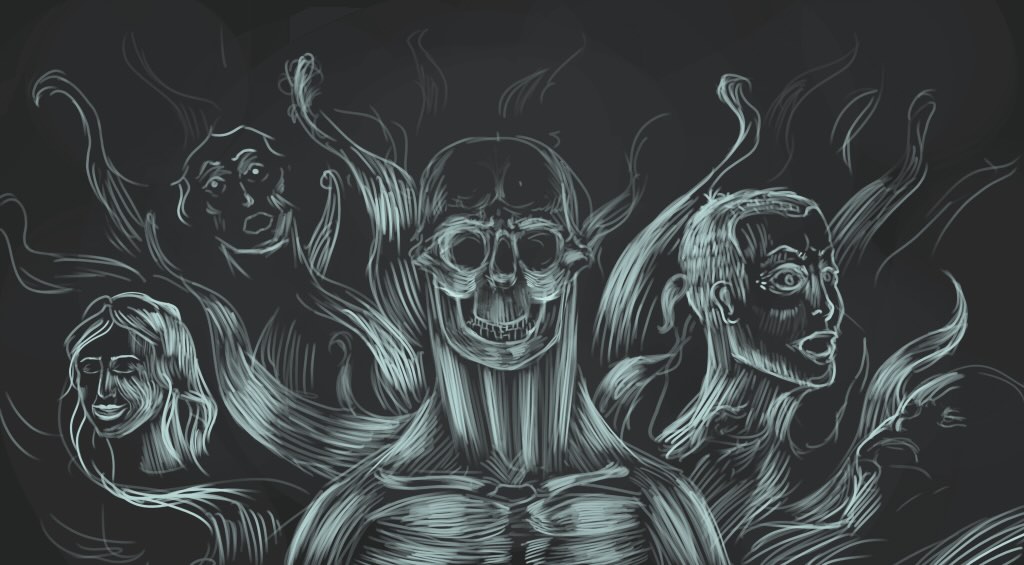
INKLUZ. The bronze medal belongs to the assistant of the devil, and its name comes from Slavic demonology. Inkluz is a ‘sneaky demon trapped in a glass object, usually in a bottle, mirror, or crystal’. These are often individuals raised in environments where the number of daily lies was minimal, and so was their significance. They lie in everyday life at rates similar to the average population or community in which they function on a daily basis. These are individuals who, when alone in an unfamiliar environment, have limited lying abilities and are cut off from the world; for example, during an interrogation, they are susceptible to manipulation techniques and pressure. They can be relatively easily led by the interrogators, and at that point, their testimonies appear as virtuous as a dancer on a pole. This type of person is often quickly identified as unreliable and does not require lengthy interrogations to change their strategy and begin providing true information or admit to lying. Their behavioral changes and physiological reactions emerge quickly and are easy to detect: changes in color on the face or other exposed body parts, changes in the pace and characteristics of verbal communication, or inconsistencies in recounting events. Such individuals are not accustomed to the interview or interrogation setting, which causes stress that reduces their control mechanisms; thus, manipulation in their case is ineffective. The pressure of stress-inducing factors triggers a significant sense of discomfort, making it difficult to maintain consistency in recounting and describing facts. Simply asking for consent to use, for example, a polygraph can change the strategy of the person being interrogated.
DISCORDIA. The second place on the podium is occupied by the goddess of discord, turmoil, and chaos. This is a person who lies much more frequently in everyday life, has relatively coherent stories, and often grew up in an environment where lying was a standard way to achieve benefits and avoid punishment. The previously described Leon fits this type perfectly. In a situation of significant emotional pressure (higher than that of Inkluz) or in the face of significant threat, they may give in and change their testimony. These are not individuals sufficiently prepared for lying to maintain complete coherence in their stories. Someone who analyzes the topic of lies calculated that Donald Trump lied 10,000 times during his four years in office. But since it’s so easy to prove that he lied, he certainly doesn’t deserve to take the highest place.
The first place in the ranking of liars is occupied by a type with a distinct psychopathic trait:
BEŁT. From Slavic mythology, this is a demon who deliberately misled people and maliciously confused their paths. These are individuals who have achieved the most in life by introducing lies. The example of Ted Bundy, a serial killer, demonstrates how a high level of intelligence, enriched with manipulation techniques, including lies, helps in gaining the trust of victims and executing murderous plans. Posing as a representative of authority or pretending to be disabled, combined with a pleasant appearance and persuasive communication style, allowed him to abduct victims in public places. In broad daylight! Such individuals are aware of their appearance and can ruthlessly incorporate it into their style and manipulation techniques. This is one of the more important things that interrogators should pay attention to: the ruthless exploitation of their attributes to exploit the mistakes of those conducting the interrogations.
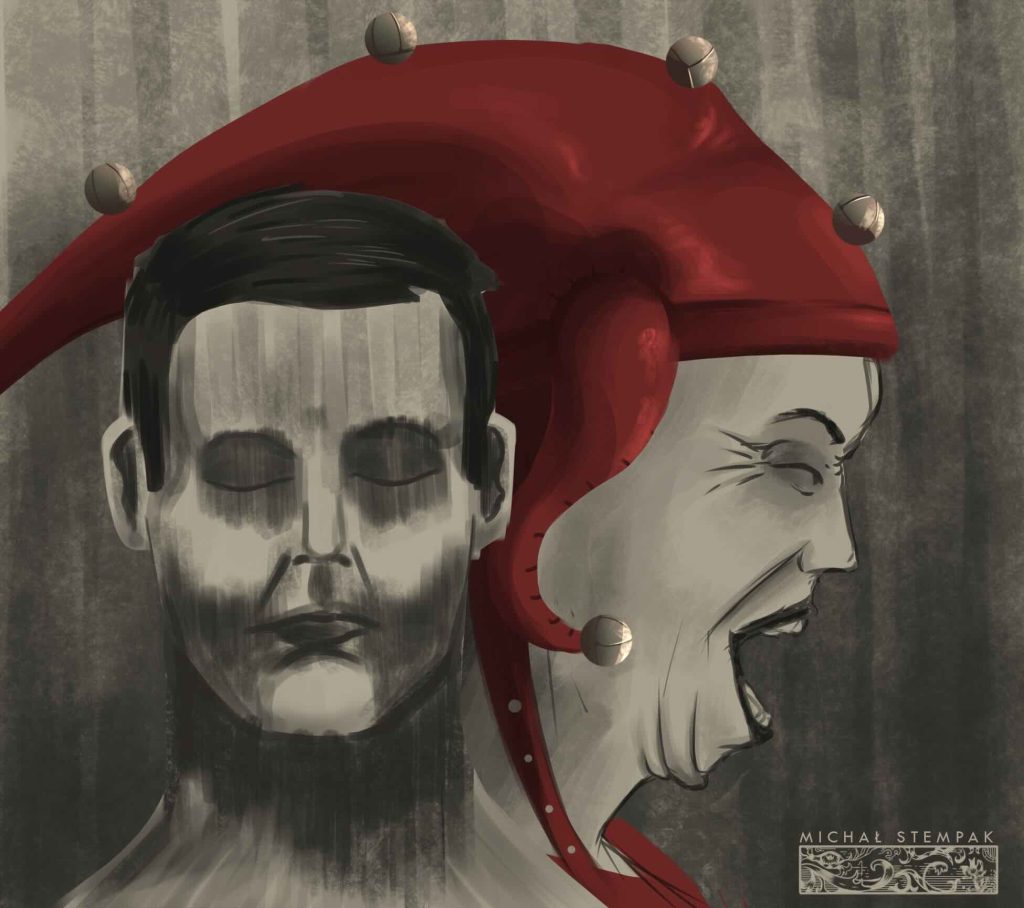
In this group, there are certainly many other individuals who, for example, due to their professions and positions, lie and learn to lie. The difficulty in interrogating criminals arises from their rich experience; the more intelligent ones learn from one interrogation to the next and verify their methods of providing information. They often achieve mastery in this area through street or internet scams. They employ a wide range of influence techniques, starting from non-verbal communication, through ways of building trust and credibility, to advanced manipulation techniques that support lying.
We will also include individuals trained in lying (such as special services personnel and negotiators in companies). During the war, British intelligence trained saboteurs with long hours of training, enabling them to employ a cover story during potential interrogations by German intelligence. The conditions were similar to real ones, such as lack of sleep, aggression from interrogators, or presenting alternative facts with fabricated evidence. Such individuals rarely succumb to multi-level and verification questioning, do not show signs of lying, and know ways to trick a polygraph. But how to recognize lies? We will leave that for one of the upcoming entries.