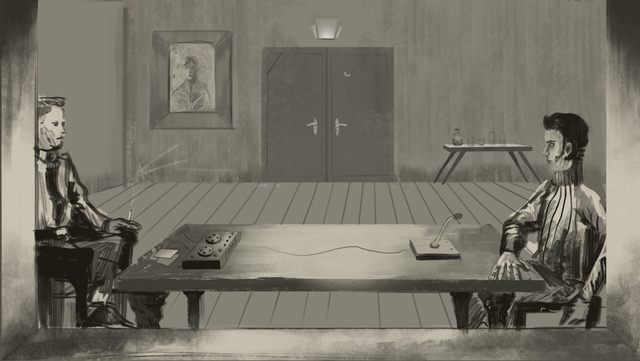
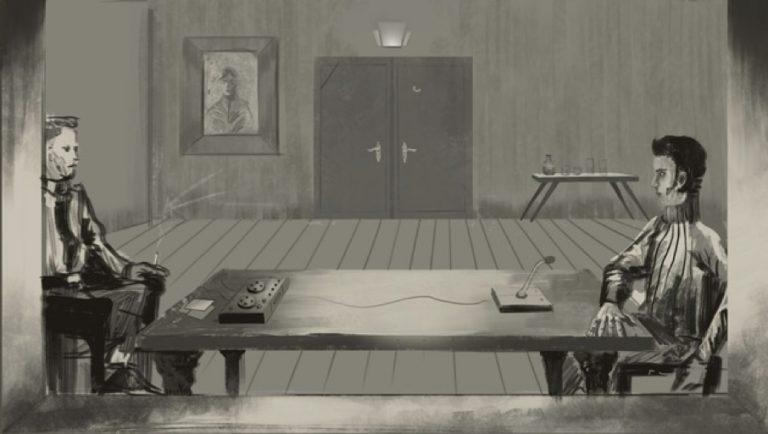
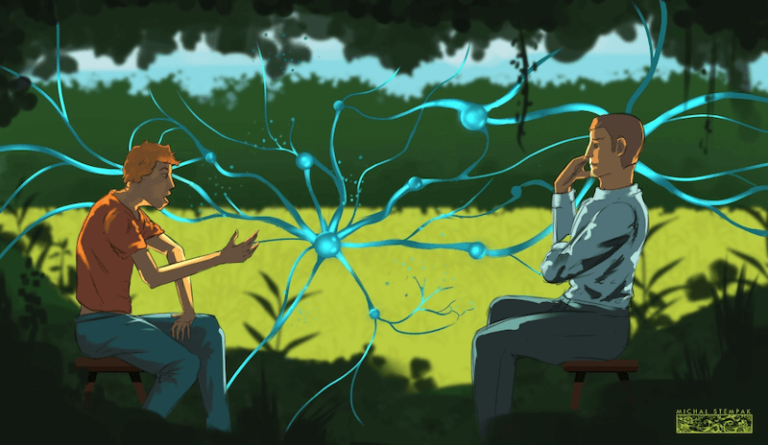
Do you know how space can affect concentration? How to create the right environment so that interviews yield essential information? What mistakes do those arranging spaces for investigative hearings make?
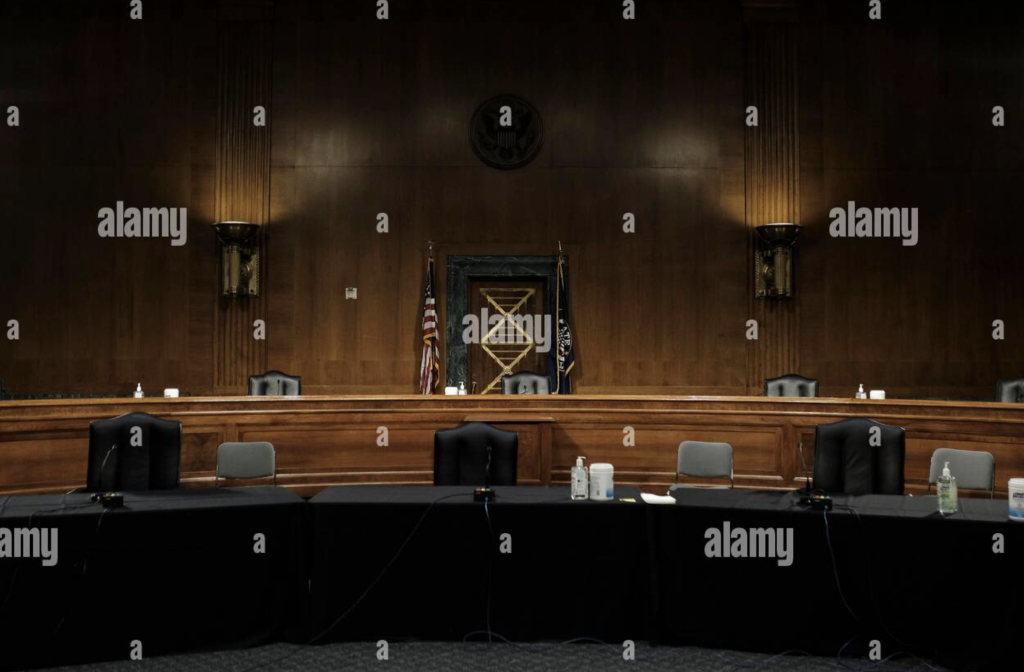
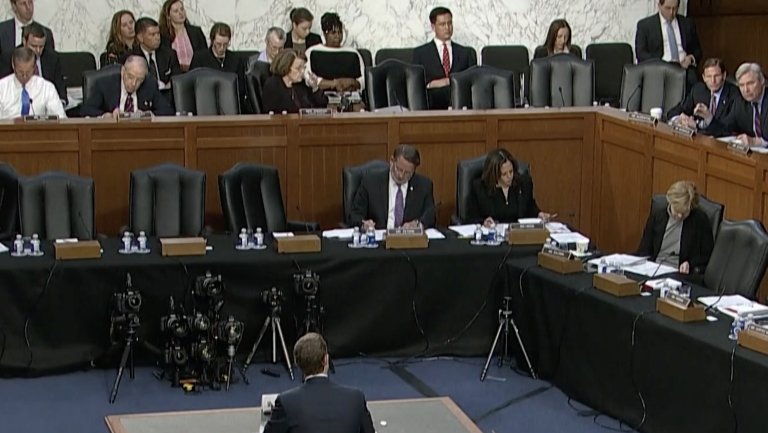
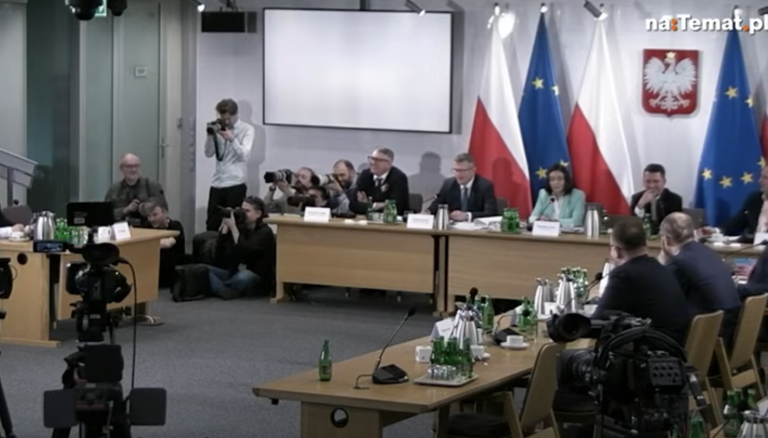
One of the tests measuring progress in dementia involves finding as many differences as possible between two pictures or drawings. The two images I present below relate to the spaces in which interrogations take place. One of them shows the space of the U.S. Senate Intelligence Committee, while the other image depicts the space adapted for hearings by the Polish investigative committee concerning Pegasus (an Israeli spying and surveillance system). Looking at both pictures, you will likely have no trouble finding the differences between them—the dementia hasn’t set in yet.
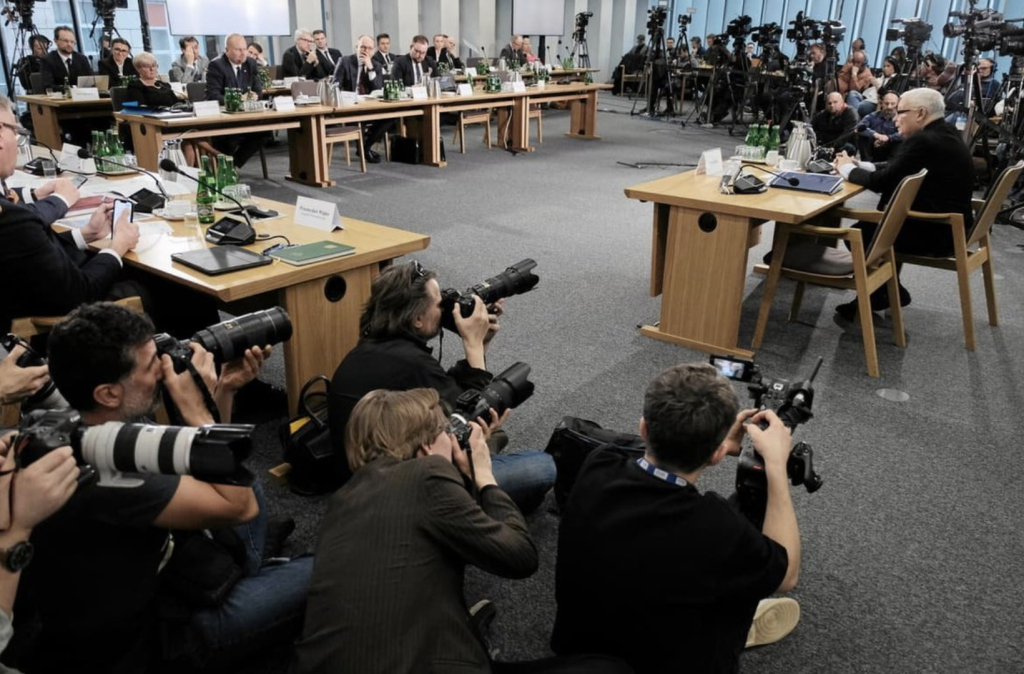
The Main Objectives of the Hearings in These Two Cases
The main objectives that the hearings are meant to serve in these two cases are similar: to obtain important and detailed information from the interviewees. Let’s take a moment to analyze the significance of the environment and space in interviews. What specific characteristics of a space influence the increase of communication distance, restraint, or, conversely, contribute to greater openness and honesty? All of this falls under the field known as “Context Management.”
Looking at the picture on the right, I wondered where the cleaning lady from Bareja’s films is, with a headscarf and a dirty rag in hand, wiping the lenses for the journalists. You might say, “That’s nice, but what does it matter? The difference is akin to that between a gluon and a quark before and right after the Big Bang.” I’ll explain below.
According to Nobel laureate and Professor Daniel Kahneman from Princeton University, we operate using two data processing systems. For simplicity, let’s call them System 1, the fast one, and System 2, the slow one. The first system requires very few operations to provide answers: e.g., who is the president of the USA? How long will a flight to the moon take? It is heavily automated and, importantly, has direct access to information. However, this certainty must first be confirmed by System 2, and only then does System 1 receive this confirmation as a belief or decision that something is right or not.
System 2 operates much more slowly than System 1; it controls thoughts and behaviors, relies on argument analysis, draws conclusions, and applies logical or mathematical rules. It most likely engages mainly the prefrontal cortex. You can recall whether complicated mathematical tasks or logical puzzles required concentration and focus to achieve good results. Is it possible to effectively utilize the second system in an environment that does not foster it? Probably not—excessive noise, poor lighting, or other distractions will certainly adversely affect most individuals.
During an interview, the participant or interviewee should be in a space that provides calmness and allows for concentration, free of distracting elements. We must remember that the primary goal is to obtain accurate and reliable information from the interview participant or interviewee.
Manipulations of space and environment were prevalent in Nazi techniques. Distorted images and decor elements, light from windows and lamps falling on the interviewee, a poorly lit or shadowed face of the interrogator, and physical distance were all intended to evoke feelings of uncertainty, submission, fear, and consequently, to coerce a confession of guilt. Rapidly closing the distance to ‘escape distance’ was designed to heighten the feeling of fear and create emotional tension.
Thinking about space arrangement under normal conditions (ignoring aberrations), let’s consider the main objectives: acquiring information, or as investigators say, revealing information. For this to occur, several mental processes must engage, primarily involving System 2.
In competency interviews and many others, participants are always asked to recall past experiences, form opinions, evaluate their actions, and refer to principles and values, etc. Space, distance, and environment are certainly crucial factors enabling the effective functioning of System 2.
Proper context management in interviews (physical space) significantly influences the acquisition of accurate and reliable information. It is a component of building rapport and managing the relationship between the interviewer and the participant. The environment is also part of the atmosphere that affects the level of trust.
Size of the Space
Some say size matters, while others say it does not. The same applies to interviews: some studies confirm that size matters, while others do not. Research by K. Hoogesteyn, E. Meijer, and A. Vrij (2019) showed that the size of the physical space and the interpersonal distance between the interviewers and the interviewees has no effect on the revelation of information related to a crime. Other studies are not conclusive in this regard.
However, it is worth noting that a deeper analysis of the same studies revealed:
- More positive experiences for interview participants when taking place in spacious rooms,
- A significant correlation between perceived spaciousness and the level of understanding achieved during the interview,
- A correlation between spaciousness and the willingness to disclose information,
- Reports of a desire to leave too small a room,
- Participants’ perception of a shorter distance from the interviewer as less comfortable.
Distance
Discomfort related to the size of the space and the distance between the participant and the interviewer may stem from cultural patterns and individual preferences regarding safe distance. Discomfort can arise from both spaces that are too small and those that are too large. A small space often results in a short distance between interlocutors, which for many people constitutes a significant limitation to communication freedom.
However, there are other approaches; for example, the assumptions of the Reid technique (a controversial interrogation method) advocate for reducing the distance, which is intended to increase the level of intimacy and, consequently, to obtain more information.
An excessively large space can also induce discomfort. This arises from the subconscious connection between physical distance and the distance resulting from the social roles being played. We interact differently with individuals who have a high position in the hierarchy than we do when we perceive them as peers. This can be observed in many political party leaders who reduce the distance to their audience (by occupying central positions in the discussion space, being near the front rows, or walking toward the audience).
In some government institutions, I have encountered the practice of qualification interviews conducted by multiple-person committees, where a long table separated the interviewers from the candidate, with the committee seated about four meters away. I have heard committee members express that the candidates are taciturn and difficult to engage in open communication. What a surprise… Especially considering that the age difference between committee members and the interviewees reached 40 years.
We should note that interviews often correlate with significant levels of stress and generally strong emotions. The distance we arrange during the interview will reflect the emotional relationship, the status of the conversation, and the type of interview being conducted.
Practice shows that both elongating and shortening the distance during a conversation signals the expression of emotions (+ / neutral / -) and the attitude in the relationship from the interviewer to the participant. According to Edward Hall (who distinguished eight social distances), the distance we are interested in, termed ‘social distance,’ is 120–360 cm. My experiences suggest that a distance of 1.5 m to 2 m allows for establishing a good interpersonal relationship with the interviewee. However, in panel interviews, it is necessary to increase that distance; in my opinion, a distance of up to 2.5 m between the furthest participants in the interview is optimal.
Eliminating Disruptors
Managing the context of interrogations also involves arranging elements such as sounds, color schemes, light color and intensity, and the materials used for walls, floors, ceilings, and other interior decor elements.
Many studies indicate that lighting is a factor that influences interpersonal contact. Natural daylight will improve comfort for both parties and positively affect well-being and concentration. To serve this purpose, one must consider the arrangement of chairs so that the light does not fall directly on either side. Another aspect to note is that during certain months, natural daylight can fade as early as 3 PM, thus shifting us into the realm of artificial lighting. The best solution is side lighting with natural color; one that allows us to feel comfortable even after two hours of conversation. It is important to remember that interviewers or those conducting interviews may need to spend five hours or more in this lighting, which also impacts levels of fatigue and concentration. If using LED bulbs, it is advisable to choose a neutral color and avoid overly intense or cold lighting.
A significant disruptor for interview participants is spaces designed for business meetings but not for interviews. Glass doors can generate a high level of discomfort; everyone will consciously or subconsciously wonder who is approaching from behind or from the side and whether they are being observed by outsiders. I try to avoid conducting interviews in spaces that do not provide sound insulation. Sounds leaking in from behind doors or thin walls signal to the candidate that their statements may be heard on the other side.
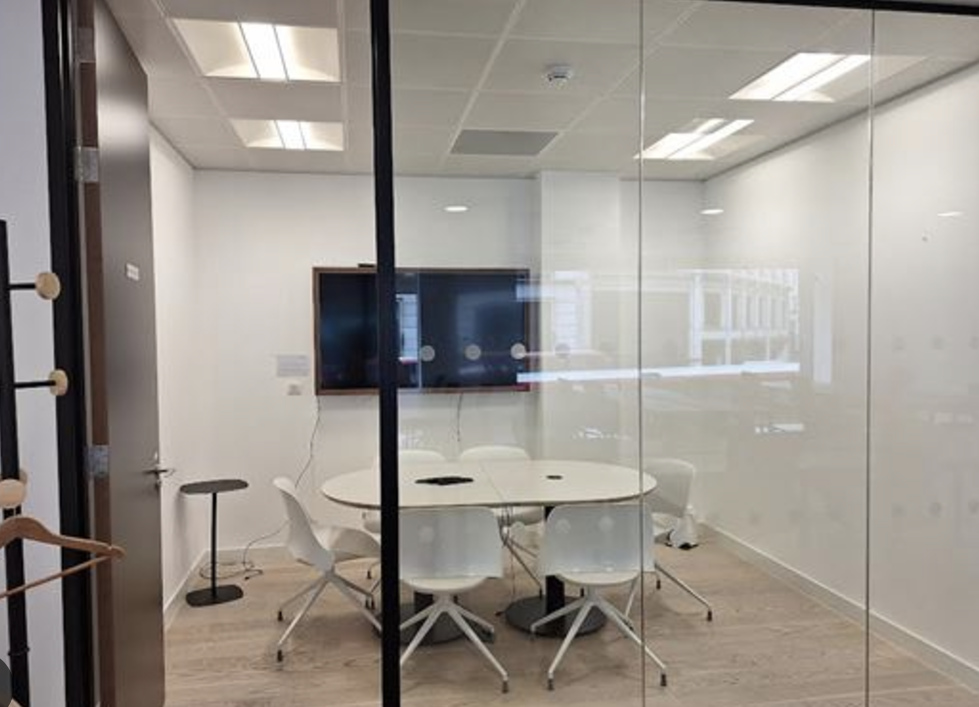
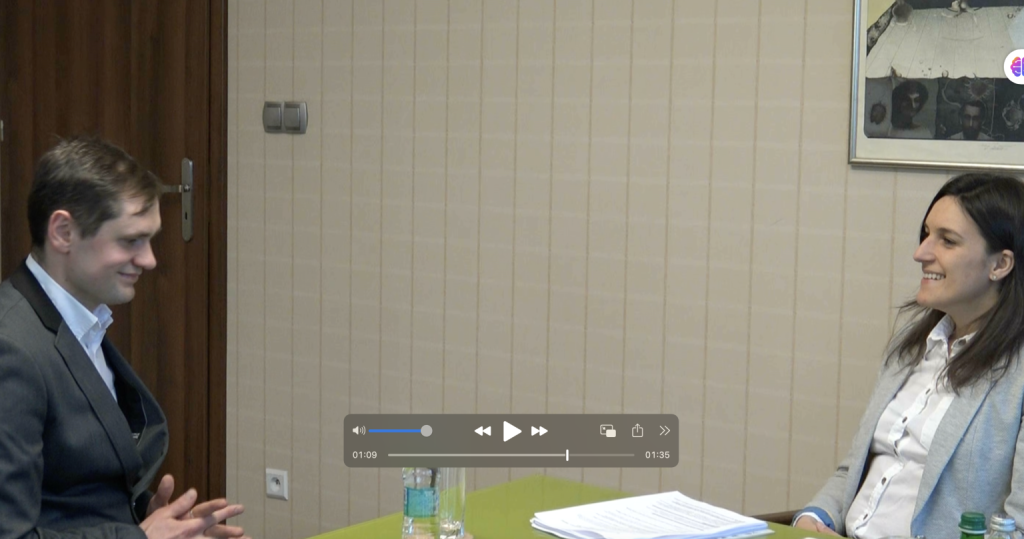
Best Practices and the Impact of Space
The best practices I have encountered are those that take into account the fact that the candidate or participant during the interview should feel comfortable regarding distance, space size, and the assurance that they will not be observed or overheard by outsiders.
The inclusion of media and its arrangement is also a significant issue that affects the course of interrogations (putting on a show for the media, the awareness of building an image, etc.), which, however, requires separate consideration. In business organizations and beyond, a good practice is to utilize smaller conference rooms or those prepared for negotiations in neutral conditions, creating an environment that tones down emotions.
Ineffective practices include demonstrating power distance through space. If interviews occur in the offices of owners with a narcissistic character, there will surely be decor elements that indicate who is at the top of the food chain.
Space and the Organization’s Image
A secondary goal is to utilize space as a means of building prestige or the image of a company or state in the eyes of job candidates, those interrogated in Senate commissions, or otherwise. This is a secondary goal, but often significantly contributes to the image of the institution conducting, for example, an inquiry.
As you may notice in television reports, the number of joking remarks, silly behaviors, and nonchalant responses increases as the seriousness of the environment in which interrogations take place decreases. An example can be the previously mentioned Pegasus committee, which was rife with statements from the interrogated such as: “You can ask that.”, “Member…”, “That’s the result of your unpreparedness for this position,” etc.
Another question that arises is how the sound of camera shutter clicks might affect you during interrogations. How do you feel when their intensity increases in situations of changing facial expressions, gestures, etc.? Placing yourself in the role of the interrogated (anyone can find themselves in this situation), think about how the subconscious works when you answer questions, for instance, from a commission while some individuals ostentatiously look at their phones (the behaviors of panel interview assessors will be the subject of another article).
The seriousness of the interrogation venue encompasses primarily: A. The arrangement of furniture that allows for good communication and observation between the interrogated and all members of the committee. B. The arrangement of furniture that reflects the seriousness and status of the investigations being conducted, etc. C. Neutral lighting that enables concentration and focus. D. Minimizing the number of cameras, cameras, and the sounds they produce. E. Eliminating all distracting elements; clutter, protruding cables, crookedly hung screens, etc. F. Name tags with the first and last names as well as the roles of all participating individuals should be visible and legible to the most distant participant.
Safety
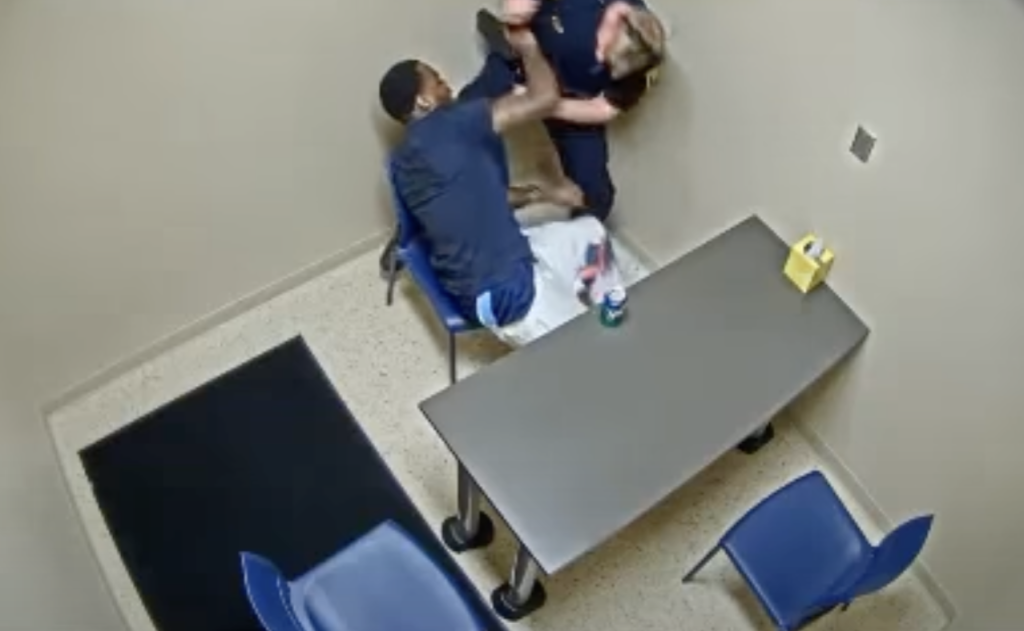
When arranging a space, it is important to prepare for difficult or even extreme situations. As seen in the attached photo below, a murder suspect is trying to draw a weapon on the police officer who is securing him to the chair. The proximity of the two walls makes the suspect’s intention more real. Setting aside the procedural aspects of this situation, if the officer had more space to move away and quickly increase the distance, he might have been able to extricate himself from the perilous situation. In this instance, two additional individuals were forced to subdue the assailant.
A good tip is found in the book “You Don’t Have to Be Crazy to Work Here” by Benji Waterhouse. During one of his first internships at a psychiatric hospital, he receives advice from an older psychiatrist to always sit close to the door, which allows for an escape. However, practice has its own effects.