DETECTION OF LIES part 1.
How can the integrated model help in recognizing lies? What is the participant’s ‘baseline’ and how can it be used? Whether and how can the interrogated manipulate the interrogators?
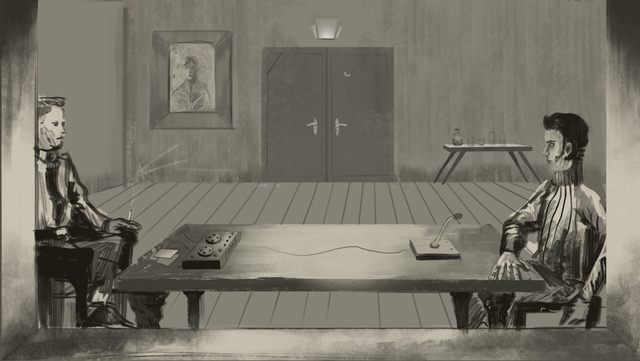
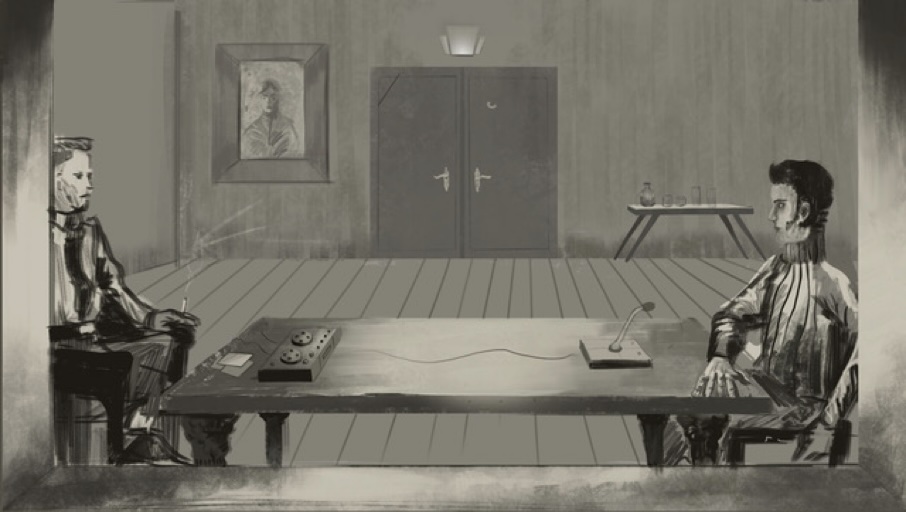
“Konrad had been working in our department for over a year to gather information on the operations of one of the larger smuggling networks in the EU, which had begun its activities back in the 1990s. His greatest success was the ‘silent’ arrest of Wiktor L., who had been sitting in front of us for four hours during the interrogation, illuminated only by a dim bulb and the dark light of the setting twilight, streaming through the only small window we had in our interrogation room.
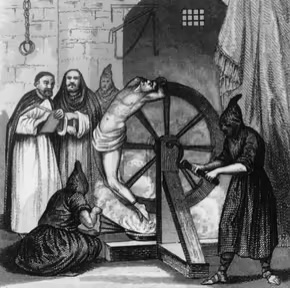
When Wiktor denied our information about his involvement in the smuggling group ‘Horał’ and the key role he played in it, we decided to implement our standard multi-step lie detection model. The first instruments were brought into the room: a bucket with a cage for a rat, a set of gears for slowly breaking fingers, and our favorite apparatus: a bed with body immobilizing elements and a dropper for water. We began with the last device: we set the dropper to release a drop of water onto the center of Wiktor’s forehead every two minutes. After only a few hours lying in a position that made it impossible to move his head even by a centimeter, he should have felt every falling drop in his brain like a blow from a multi-kilogram hammer. Normally, we ask questions after the first three hours and then every hour and a half until we achieve the results we deem qualified. The toughest individuals could endure eleven hours. It took Wiktor only five: he provided us with six key names, including three from the higher echelons of the Customs Service and the date of his entry into and assumption of a position in the group’s management. He also provided two key names of cooperating customs officers on the eastern border. Konrad, with a smile on his face, rushed out of the room, as I guessed, to the analysts’ room, which was one floor up. He returned after fifteen minutes, throwing down the pad on which he had previously noted all the information. The look on his furious face could have been cast in bronze to commemorate the moment of defeat.
Only in the evening did I read in Aristotle’s ‘Rhetoric’ that he questions the use of torture to obtain truthful testimony. He believed that many people might testify falsely to avoid pain, which undermines the credibility of ‘quaestio’ under these conditions.”
And seriously, the effectiveness of lie detection depends on the application of an integrated model; as the name suggests, it is a combination of several component elements.
The exercise I recommend for improving your abilities in this area: try starting by observing people from your closer or distant surroundings who are undoubtedly reliable and very rarely lie (you know them well and have repeatedly checked their truthfulness). Pay attention to how they behave when answering even standard questions about what they did, how they feel, etc. What vocabulary do they use, what arguments do they present, how does their voice sound, what is its volume and tone, how do they look at you, how do they gesticulate, how do they react to increasingly difficult and detailed questions. This model of behavior that appears in neutral situations without stressors or pressure is called the ‘participant’s baseline,’ which is the basic communication style that emerges in standard situations.

Then test them by asking uncomfortable questions; for example, about contact with a person whom your interlocutor was supposed to talk to long ago (and you know that they didn’t speak). Ask about contact with someone they dislike and who causes them significant discomfort, or about handling an uncomfortable matter, etc. Observe the differences between these behaviors and try to categorize them into various groups.
Skillful observation and classification of behaviors is one of the first steps in developing skills related to identifying behaviors suggesting deceit. If you gain experience through these types of observations, start attempting to classify behaviors. Try to answer the question: which behaviors and which signals are connected. This method is called creating clusters (groups, teams) of behaviors indicating the possibility (which is very important) of the occurrence of a lie. Thus, we group individual signals, and their connection with other aspects of the conducted interview gives us the ability to approach a holistic assessment of the information conveyed by the participant.
The next stage is the integrated assessment, which is based on every available piece of information about the participant: from detailed biographical data, opinions of psychologists and psychiatrists, previous interviews, to environmental opinions and the behaviors presented by the participant following the interview.
If you do your homework well, you will notice that relatively often people do not behave in line with our expectations. When assessing reactions to asked questions, we must work to set aside our own beliefs about what a credible answer should look like, which behaviors must correlate with telling the truth, and which with lying. Maintaining distance from our own convictions, observing behaviors, classifying, and creating clusters will be the factor that significantly influences the improvement of our qualifications. One could say, in behavioral terms, that the foundation is the ability to link behaviors, clusters of behaviors with stimuli that provoke them, that is, with the question. Once we reach the level of masters of the Inter-School League, we can move on to the next step, which is attempting to combine observations of behaviors with listening to answers. Of course, it seems to all of us that the integration of audio and visual stimuli reception is an everyday occurrence in our social lives, and thus it shouldn’t be an issue. However, this is not a simple and obvious task at all. Analyzing the responses of the interrogated individual is complicated in itself, as it requires multi-level engagement of our mind: linking heard information with what we already possess, referencing earlier statements, assessing coherence, and preparing thoughts for further questions. During this time, observation should trigger processes in the brain to analyze non-verbal behaviors: changes in posture, gestures, eye movements, blink frequency, changes in the color of exposed body parts, etc.
An interesting example is the case of the Swedish Hannibal Lecter, Thomas Quick, who for many years was considered a psychopath, serial killer, and cannibal. One day in 1992, Thomas Quick asked his therapist: “What would you say if I did something really bad? Maybe I murdered someone?” As soon as he finished speaking, he noticed immediate interest from the therapist. And then the avalanche began. During subsequent sessions, he detailed how he mutilated, raped, strangled his victims, and then ate their remains. Consequently, investigators arrived in Säter… All of Quick’s details were acquired based on literature available at the psychiatric center. He obtained further information from the investigators questioning him and therapists. A significant influence on his confabulations and even delusions was the administration of 20 mg of diazepam every few hours. He admitted that usually, one article in the newspapers was enough; the rest of the information came during interrogations conducted by the police, conversations with therapists, or other members of the investigative team. “I knew I had to listen carefully. I studied books about famous murders and articles about the missing. I coded significant details – body position, specifics of the landscape, the victim’s clothing.”
What could be the motivation for attempts to create a monster image in public opinion? As he himself admitted, spending many years in a psychiatric center intensified his desire to evoke interest in himself and to be the center of attention.
(The quotes come from Joanna Pasztelańska’s publication “A Tailored Monster, or the Greatest Scandal of Swedish Criminalistics.”)
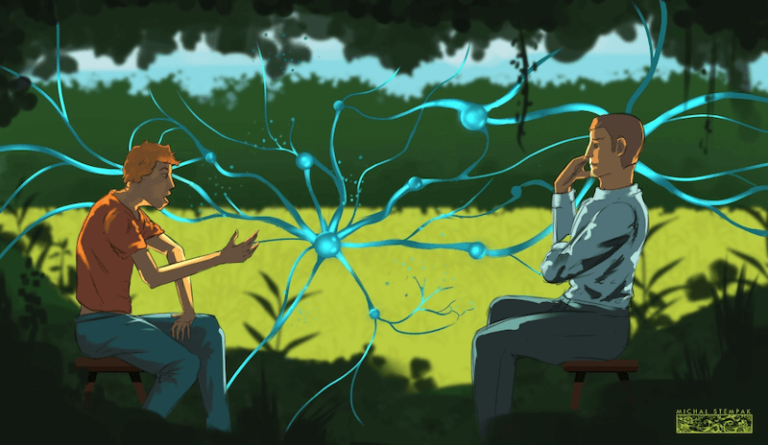
So if you think that reading body signals is solely the domain of interviewers, you are mistaken. Those who are hunters also become the prey. A high level of concentration on recognizing the behaviors of the interrogated individual may lead to a decrease in self-control. I often experience situations where the person being interrogated changes their speaking style or begins to control the quantity and quality of the information conveyed based on the questions I ask or the answers given to their questions.
We already know how important it is to control oneself and to approach the analysis of behaviors in a holistic manner. Now we can break down the indicators of lying into components so that it is easier for us to work on combining them into a meaningful whole, which is to make decisions regarding further actions. But for now, I will finish; the next episode is probably knocking at my door and cannot wait for its turn.